Foolproof Boiled Eggs: Achieve Perfect Runny, Jammy, or Firm Yolks
For many, the simple act of boiling an egg can feel like a culinary gamble. Will the yolk be perfectly runny, lusciously jammy, or disappointingly chalky? The quest for the ideal boiled egg often ends in frustration, leaving us with an interior far from what we envisioned. But what if we told you that achieving your desired egg consistency, every single time, is not only possible but practically foolproof? The secret lies in understanding precisely how long to boil eggs for each specific result.
Whether you dream of a delicate runny yolk to dip your toast into, a vibrant jammy yolk for your ramen, or a firm, creamy yolk for salads and sandwiches, mastering the art of the boiled egg is an essential skill for any home cook. We've cracked the code, meticulously testing methods to bring you a simple, yet incredibly effective guide to perfect eggs on your stovetop.
The Universal Method: A Foundation for Perfection
Before we dive into the specific timings, let's establish a consistent, reliable method for boiling eggs. This approach ensures an even cook and sets you up for success, no matter your desired yolk consistency. Consistency in your technique is key to reliably knowing how long to boil eggs for the outcome you seek.
- Prepare Your Pot: Choose a saucepan large enough to accommodate your eggs in a single layer without overcrowding. Add enough water to cover 6 or fewer eggs by about 1 inch, or 6+ eggs by 2 inches. This ensures even cooking and prevents jostling.
- Bring to a Rolling Boil: Place the pot on high heat and bring the water to a vigorous, rolling boil. For speed, you can even use an electric kettle to heat the water first.
- Gentle Immersion: Once the water is boiling fiercely, reduce the heat to a steady, rolling simmer. Using a slotted spoon, carefully lower your eggs into the hot water. This direct-to-simmer method provides precise timing control. Avoid dropping them directly to prevent cracks.
- Set Your Timer: This is where the magic happens! Immediately start your timer for your desired doneness (we’ll cover specific timings below). Remember, the clock starts the moment the eggs enter the hot water.
- The Ice Bath: As soon as the timer signals, swiftly transfer the eggs from the hot water into a large bowl filled with ice water. This crucial step immediately halts the cooking process, preventing overcooking and helping to create those coveted easy-to-peel shells. Allow them to cool for 5-10 minutes.
- Peeling Perfection: For the easiest peeling experience, peel your eggs under cold running water. Gently tap the wider bottom of the egg (where the air pocket typically resides) against a hard surface, then roll it back and forth to create a network of fine cracks. Start peeling from the wider end, letting the water help loosen the shell from the membrane.
This systematic approach, from heating the water to the essential ice bath, is the cornerstone of perfect boiled eggs. Now, let's explore the precise timings that dictate the magic within.
Decoding Doneness: How Long to Boil Eggs for Every Craving
The beauty of a boiled egg lies in its versatility, primarily determined by its yolk's texture. Understanding how long to boil eggs for each stage is your ticket to culinary delight.
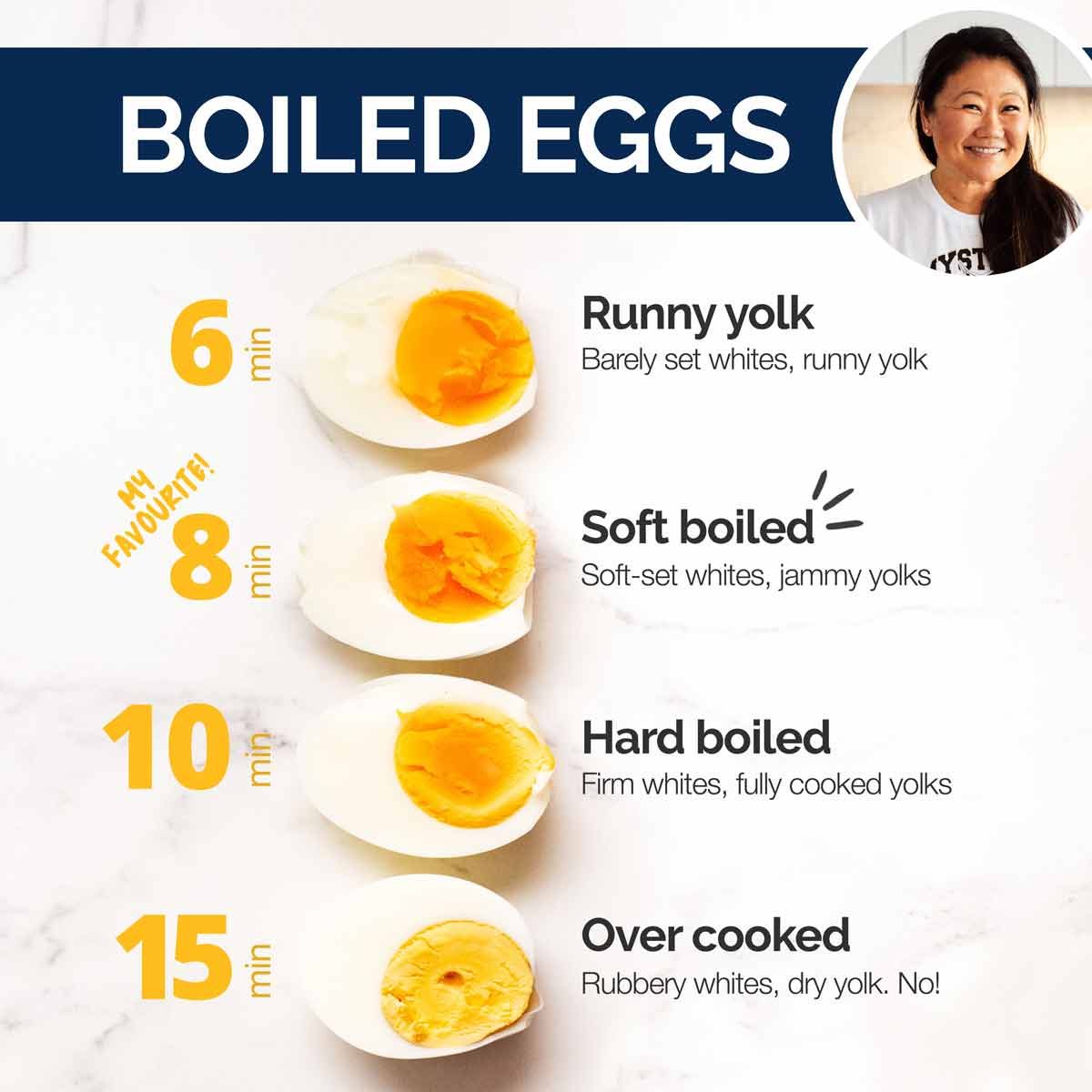
Runny Yolks: The Dipping Dream (4.5-5 minutes)
- 4.5 Minutes: At this point, the egg whites will be just barely set, with a super runny, liquid yolk. Some might find the whites slightly wobbly, but the yolk is pure gold for dipping.
- 5 Minutes: The whites are softly set, providing a perfect enclosure for a wonderfully thick, still gloriously runny yolk. The yolk retains its vibrant orange hue.
Ideal Uses: These are the quintessential "dippy eggs" for toast soldiers, a luxurious topping for avocado toast in place of a poached egg, or anywhere you crave that rich, flowing yolk to meld with other ingredients. For more detailed instructions on achieving this delicate balance, you might find our guide How Long To Boil Eggs: Perfect Soft, Jammy & Hard Eggs Guide particularly helpful.
Jammy Yolks: Perfectly Gooey Goodness (6-7 minutes)
- 6 Minutes: Here, the egg white is fully set, and the yolk transitions into that desirable thick, jammy consistency – still slightly runny and gooey, but with more body than a truly runny yolk.
- 7 Minutes: The yolk is fully set but maintains a beautiful, thick, and barely runny, almost custard-like texture. It's rich, creamy, and holds its shape beautifully.
Ideal Uses: Jammy eggs are a revelation in ramen bowls, adding a silky depth to the broth. They're also fantastic halved over noodle dishes, grain bowls, or as a sophisticated addition to salads.
Creamy Medium Yolks: Versatility on a Plate (8-9 minutes)
- 8-9 Minutes: At these timings, the egg whites are tender and fully cooked, while the yolk is set, firm, but still wonderfully creamy in the center. It's no longer runny but hasn't turned dry or crumbly.
Ideal Uses: Medium-boiled eggs offer incredible versatility. They're substantial enough for sandwiches, salads, and charcuterie boards, providing a pleasant chew without the dryness sometimes associated with hard-boiled eggs. If you're looking to master these specific timings on your stovetop, our article Boil Eggs on Stove: Master Soft, Medium & Hard Egg Timings offers further insights.
Firm Hard-Boiled Yolks: The Classic Staple (10-13 minutes)
- 10-11 Minutes: The yolks are fully set but retain a slight tenderness. The texture is firm but not rubbery, and the color remains a vibrant yellow.
- 12-13 Minutes: For a completely firm, classic hard-boiled egg, aim for this duration. The yolk will be solid and crumbly, perfect for mashing.
Ideal Uses: Hard-boiled eggs are a pantry powerhouse. They're perfect for deviled eggs, egg salad, a high-protein snack, or adding to potato salads. Be cautious not to overcook beyond 13 minutes, as this can lead to a sulfurous smell and that undesirable greenish-gray ring around the yolk, indicating the iron in the yolk has reacted with sulfur in the white due to excessive heat.
Beyond the Timer: Essential Tips for Boiled Egg Mastery
While precise timing is paramount for knowing how long to boil eggs, a few additional considerations can elevate your boiled egg game from good to absolutely perfect.
The Cold Water Start vs. Boiling Water Immersion
Our recommended method of adding eggs directly to boiling water and reducing to a simmer is fantastic for precise control over yolk consistency. However, some prefer starting eggs in cold water and bringing them to a boil. While this can sometimes aid in easier peeling for hard-boiled eggs, it makes precise timing for jammy or runny yolks more challenging due to the varied heating rate. For consistent results across all doneness levels, the boiling water immersion is superior.
Egg Size Matters
Our timings are based on large eggs. If you're using extra-large eggs, you might need to add an extra 30-60 seconds to the boiling time to achieve the same level of doneness. Conversely, for medium eggs, you might shave off 30 seconds.
Freshness and Peeling
Paradoxically, slightly older eggs (about a week to 10 days old) tend to peel much easier than very fresh eggs. The pH of older egg whites changes, causing the albumen to separate more readily from the shell membrane. The ice bath also plays a critical role here, causing the egg to contract slightly away from the shell.
Preventing the Green Ring
That unappetizing greenish-gray ring around the yolk of an overcooked hard-boiled egg is a common complaint. It's caused by a reaction between iron in the yolk and sulfur in the white when exposed to high heat for too long. The best way to prevent it is to stick to the recommended timings (10-13 minutes maximum) and immediately transfer the eggs to an ice bath to stop residual cooking.
Storage Savvy
Properly stored boiled eggs can be a convenient protein source throughout the week.
- In the Shell: Unpeeled hard-boiled eggs can be stored in the refrigerator for up to one week. The shell acts as a natural protective barrier against odors and bacteria.
- Peeled: Peeled hard-boiled eggs should be stored in an airtight container with a damp paper towel or covered in cold water in the refrigerator, and ideally consumed within 3-5 days. Change the water daily if storing in water.
Elevate Your Egg Experience
The ability to consistently create perfect boiled eggs, tailored to your exact preference, transforms a simple ingredient into a culinary canvas. From the delicate dance of a runny yolk with toast to the satisfying substance of a hard-boiled egg in a vibrant salad, mastering this fundamental technique opens up a world of delicious possibilities. Whether you're a beginner learning how long to boil eggs for the first time or a seasoned cook refining your technique, these guidelines are designed to be your trusted companion.
Experiment with different timings, explore new serving suggestions, and never settle for a less-than-perfect boiled egg again. Enjoy the journey to becoming an egg-boiling virtuoso!
Conclusion
No longer must the perfectly boiled egg remain an elusive mystery. By following our foolproof method and precise timing guide, you possess all the knowledge needed to achieve runny, jammy, or firm yolks with confidence. From the precise moment of immersion to the essential ice bath, every step contributes to a flawless result. So go ahead, set your timer, and embark on a delicious journey where every crack of the shell reveals exactly the egg you dreamed of.
